
Context
In 2007, it was estimated that nearly 600,000 people were living with HIV in Brazil without any knowledge of their HIV status.
The State of São Paulo alone accounts for more than 42% of AIDS cases in Brazil. The city of São Paulo has the largest number of cases.
Our action in Brazil
1. Houses FXB
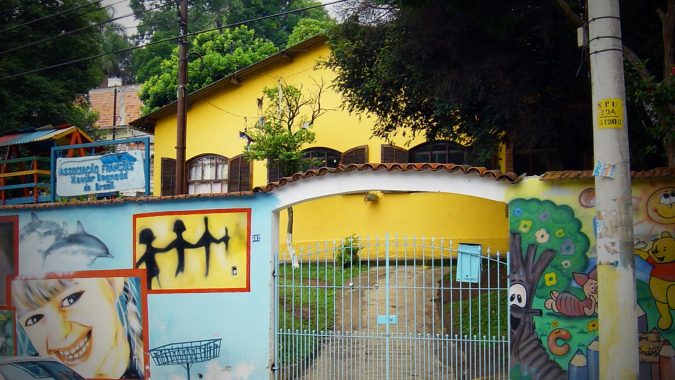
Opened in 1989, the FXB Houses are based on the concept of the Tender Loving Care: the belief that children orphaned, HIV-positive or suffering from AIDS, will have a better and longer life if they are accommodated in a family setting, surrounded by tenderness and receiving appropriate care.
The FXB Houses offered much more than medical care. From babies to teenagers living there, most were orphans or abandoned and could not rely on the support and love of their parents. The team around them had all the medical and human skills necessary for their well-being. The FXB House was their family, the frame of their child's life.
FXB implemented this concept of Tender Loving Care in Colombia, Brazil, Thailand and the United States.
In 1994, the year in which the House FXB in Campo LimpoBrazil is the epicentre of the HIV/AIDS epidemic in South America and the city of São Paulo has the largest number of cases. FXB was one of the few NGOs to operate in this sector.
Campo Limpo's FXB House was, at the time, a significant position in the fight against stigma and discrimination against people infected with HIV. It was also an alternative for access to palliative care for young patients. In addition, many children from the surrounding community attended informal education.
Our impact in Brazil
Following the joint action of FXB and several Brazilian NGOs, the Chamber of Deputies unanimously approved the amendment to section 18 of the Patent Act (9.279/96), allowing Brazilian pharmaceutical companies to produce generic antiretroviral drugs, significantly reduce the price of triple therapy and expand access.
With the arrival of antiretrovirals in the market and, consequently, the possibility of prolonging the lives of parents, all children residing at the FXB House were reintegrated into their biological family or foster families.
From 2005 to 2009, FXB Brazil's programmes supported these families, helping them to develop income-generating activities – including from recycled materials – to achieve economic autonomy. It was also intended to strengthen their overall capacities to ensure the reconstruction of the social fabric of children, thereby ensuring their well-being and social, cognitive and emotional development.
During the 15 years of FXB's presence in Brazil, many prevention and information activities were also undertaken to strengthen the capacity of marginalized communities and particularly affected by HIV/AIDS to mobilize and participate in society.
The project is now run independently by the local organisation Espaço de Prevenção e Assistência Humanizada.